

Is Juneteenth a Lie? The Contested End of American Slavery
This blunt claim not only misreads how emancipation actually unfolded but also dismisses a tradition through which Black Americans have written themselves into our national history for over 150 years.

In Concord, North Carolina, last Monday night, Cabarrus County Commissioner Larry Pittman opposed a resolution recognizing Juneteenth and called the holiday “a lie.” His reasoning was that “people were not set free by the Emancipation Proclamation,” and that an “elitist point of view” had forced an inaccurate account of events into American classrooms. The meeting grew heated, audience members interrupted, and the resolution passed over his dissent. Pittman's framing is one that has circulated for several years, and it deserves an answer.

As Juneteenth has settled into its place as a federal holiday, the counter-narrative has gained traction online. The claim is blunt: Juneteenth is a lie. The argument leans on the fact that when Union soldiers reached Galveston, Texas, on June 19, 1865, their arrival did not free every enslaved person in the United States. Thousands of people remained legally held in bondage in states that had never left the Union.
In my extensive reading of this history, the claim badly misreads how the abolition of American slavery actually unfolded. Essentially, the historical claim sitting underneath it is half right at best, and what the framing leaves out is more important than what it seems to correct. Emancipation was not a single event delivered by a distant pen but a fragmented, contested, and uneven process. To grasp what Juneteenth marks, we need to walk through the legal boundary between the Confederacy and the Union border states, and then come to terms with how entrenched the practice of human bondage in America remained long after Confederate armies had effectively surrendered.
Juneteenth in Context
To put June 19, 1865 in context, we have to look back two and a half years prior to January 1, 1863, when President Abraham Lincoln issued the final Emancipation Proclamation. The significance of Lincoln’s act has been a point of historical discussion for a very long time. Modern memory often misreads this document as a blanket decree of universal freedom. By its own explicit text, the proclamation applied only to territories “in rebellion against the United States.” It exempted areas already under stable federal control.
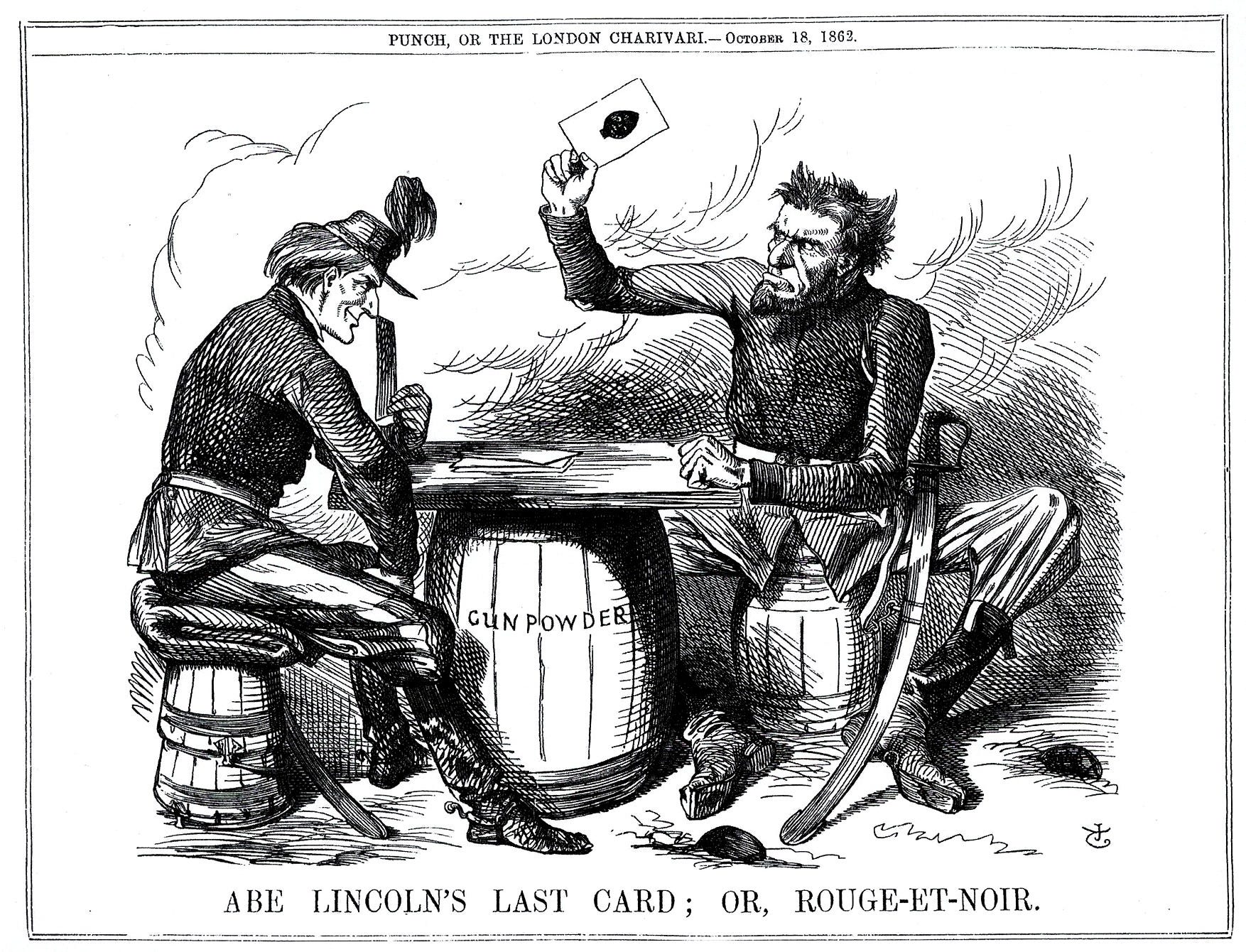
Because Texas sat at the isolated western edge of the Confederacy, insulated from the movements of Union armies, it became a refuge for slaveholders. Enslavers from Mississippi, Louisiana, and Arkansas forcibly relocated tens of thousands of enslaved people to Texas to keep them out of reach of federal soldiers. By the end of the war, the enslaved population of Texas had grown from roughly 182,000 in 1860 to more than 230,000.
When Major General Gordon Granger stood in Galveston and read General Order No. 3, declaring that “all slaves are free,” he was not announcing a new law. He was using federal troops to enforce one that had been on the books for nearly two and a half years. Juneteenth therefore marks the operational end of slavery within Confederate territory. This meant that an entire governmental system that had been built with enslavement at its core, striving to do so as an independent entity separated from the United States, was now done. For the roughly 250,000 people still held in bondage in Texas, the promise of 1863 finally became enforceable.
Yes, Slavery Existed Inside the Union
While Juneteenth marked the end of slavery within the former Confederacy, a legal paradox persisted inside the Union itself. Throughout the Civil War, the border states of Maryland, Missouri, Kentucky, and Delaware, along with the newly formed state of West Virginia, remained loyal to the federal government. Because they never seceded, the Emancipation Proclamation had no legal authority within their boundaries.
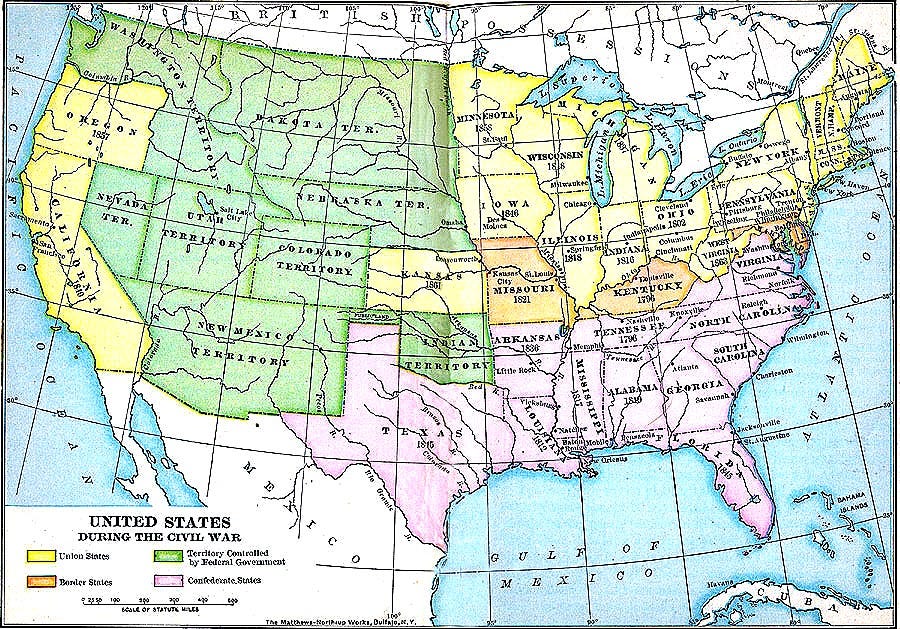
In these regions loyal to the Union, slavery remained a constitutionally protected institution, defended through state legislatures and constitutional conventions rather than through arms. But note that many border-state slaveholders treated their loyalty to the Union flag as a means of preserving the legal status of their enslaved property.
As historians at the Equal Justice Initiative have documented, the dissolution of slavery in these loyal states unfolded unevenly, on a state-by-state basis. Maryland adopted a new state constitution abolishing slavery in November 1864, followed by Missouri in January 1865. West Virginia, admitted to the Union under a model of gradual emancipation, abolished slavery outright in February 1865. Kentucky and Delaware did not follow. Their political leadership resisted state-level abolition, leaving the people held in bondage there to wait for federal constitutional change.
Fighting for the Thirteenth Amendment
Because the federal government lacked wartime authority to dismantle slavery in loyal states, the absolute legal end of human bondage required a permanent change to the Constitution.
The road to passing and ratifying the new amendment exposed deep fractures even across the North. When Congress sent the amendment to the states in early 1865, the Kentucky General Assembly rejected it on February 24, 1865, with state leaders arguing that federal abolition violated the property rights of loyal citizens. Tens of thousands of people remained legally enslaved in Kentucky well after the events of Galveston, and the state would not formally ratify the amendment until 1976.
Resistance also lingered in the North. New Jersey had passed a gradual abolition law in 1804, but an 1846 statute rebranded the state’s remaining enslaved people as “apprentices for life,” a legal category that preserved bondage under a different name. The New Jersey legislature initially rejected the Thirteenth Amendment in March 1865. Slavery in the Garden State, in other words, outlived Juneteenth.
Not until December 1865 did the Thirteenth Amendment secure enough state ratifications to become national law, finally requiring Kentucky and Delaware to free their remaining enslaved populations. New Jersey ratified the amendment in January 1866, after a newly elected legislature reversed the prior rejection. Delaware did not officially ratify the amendment until 1901. Mississippi did not formally complete its ratification paperwork until 2013.
Those long-delayed ratifications do not mean slavery remained legal in Delaware until 1901, in Kentucky until 1976, or in Mississippi until 2013. Federal abolition had been the supreme law of the land since December 1865, and no state legislature could override it. What these long delays represent is a sustained reluctance among certain state political establishments to add their state’s name to the constitutional record affirming that slavery is abolished and that Black Americans are full citizens. Mississippi’s case is the most striking. The state legislature voted to ratify in 1995, but the certificate of ratification was not filed with the federal register until 2013, after a citizen-led effort drew public attention to the gap. The 148 years it took to complete that filing reflects how persistently the formal endorsement of emancipation, and the recognition of Black citizenship that emancipation implied, remained politically contested in parts of the United States.
Why Juneteenth Matters
When Major General Granger read his order in Galveston that June, slavery remained legal in Delaware, Kentucky, and New Jersey. Does that administrative reality make Juneteenth a lie? In actuality, to dismiss Juneteenth on those grounds is to demand that history move in a straight, seamless line rather than the contested process that the historical record shows.
Juneteenth does not commemorate the closing of a legal-bureaucratic process. It marks the operational end of the Confederate government, whose founding states had named the protection of slavery as the central reason for leaving the Union. The Mississippi declaration of causes opened with the words, “Our position is thoroughly identified with the institution of slavery.” Juneteenth marks the moment the last of a large concentration of people held in bondage within Confederate territory being brought under the protection of the United States military.
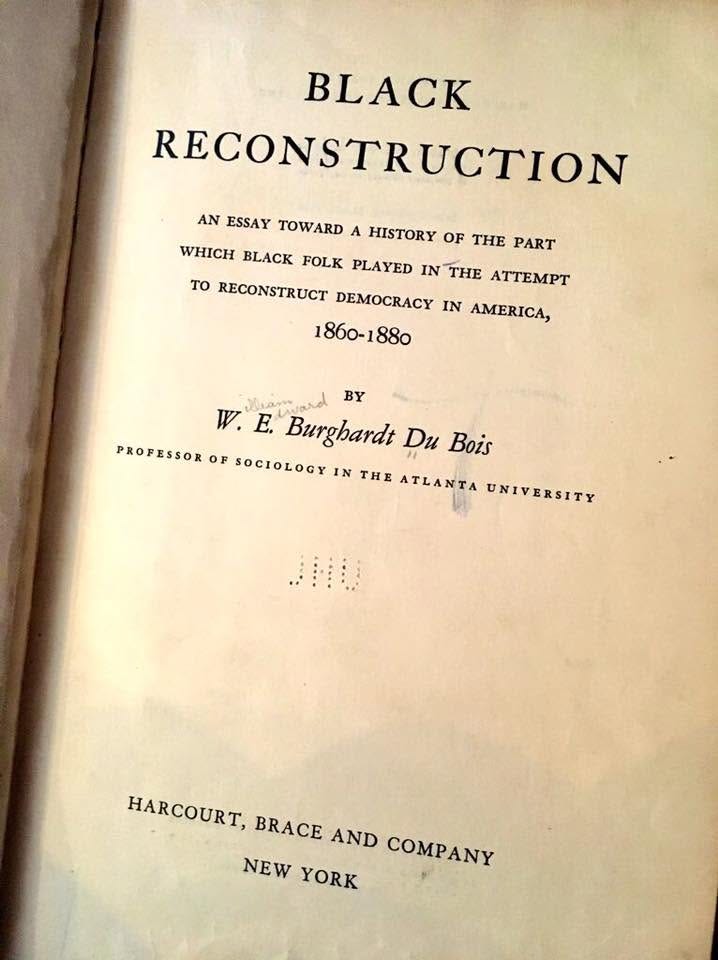
The “Juneteenth is a lie” framing participates in a longer pattern that historians have spent decades documenting. W. E. B. Du Bois laid the foundation in his 1935 study Black Reconstruction in America, where he argued that enslaved people had been central agents of their own emancipation through what he called a “general strike” against the slave system, and that mainstream American historiography had systematically erased their agency. Building on that critique, the Yale historian David Blight, in Race and Reunion, traces how, in the decades after the Civil War, an “emancipationist” memory centering Black freedom was steadily displaced by a “reconciliationist” memory that emphasized white reunion at the expense of slavery’s role in the conflict.
Two more recent works place this analytical lens directly to Juneteenth. Harvard historian Annette Gordon-Reed, in On Juneteenth, argues that critics of the holiday tend to fixate on belatedness in a way that obscures what Black Texans, and Black Americans more broadly, were actually doing when they built a commemorative tradition out of June 19, 1865. And in Festivals of Freedom, historian Mitch Kachun documents how African American emancipation celebrations were sites where Black communities constructed their own historical memory in a national culture that often refused to make space for it.
To call Juneteenth a lie, then, is not a small claim about chronology. It is a move that dismisses a tradition through which Black Americans have written themselves into our national history for more than 150 years. It weakens any reading of the American story that treats African American experience as central rather than peripheral. Indeed, in addition to Juneteenth, other commemorations of emancipation include:
Watch Night in the coastal Carolinas
Eighth of August in Tennessee
Memorial Day in Charleston, South Carolina
July Fourth in Vicksburg, Mississippi
Emancipation was a protracted struggle, and Juneteenth appropriately marks a pivotal turn, the point at which the institution that had organized Southern economy and society for generations lost its capacity to defend its exploitative order by force. The legal cleanup longer. And the work of building a fully free society still remains.
Gerardo Martí is William R. Kenan, Jr. Professor of Sociology at Davidson College and past president of the Society for the Scientific Study of Religion and the Association for the Sociology of Religion. He is an award-winning researcher and author or co-author of nine books on themes of race, religion, power, and social change. His most recent book, The Church Must Grow or Perish: Robert H. Schuller and the Business of American Christianity, is available from Wm. B. Eerdmans Publishing Co.
Join me on Bluesky
If you just want to buy me a quick cup of coffee…
Even small support is appreciated — Buy me a cup of coffee!